Understanding Torque, Speed, and Power in Mechanical Power Transmission
Understanding Torque, Speed, and Power in Mechanical Power Transmission
Mechanical power transmission is essential to the operation of countless industrial machines, automated systems, manufacturing equipment, and material-handling applications. From conveyor systems and packaging machinery to robotics and production lines, power transmission components help move energy from one part of a machine to another so equipment can perform its intended function.
When selecting or replacing mechanical power transmission components, three important factors must be considered: torque, speed, and power. These three measurements are closely connected and influence how efficiently a machine operates, how much load it can handle, and how reliably it performs over time.
Understanding the relationship between torque, speed, and power can help engineers, maintenance professionals, equipment manufacturers, and purchasing teams make informed decisions when sourcing components for new equipment or repairing existing machinery.
What Is Mechanical Power Transmission?
Mechanical power transmission is the process of transferring energy from a power source, such as an electric motor or engine, to the components that perform work.
This energy may be transferred through a variety of mechanical components, including gears, gearboxes, shafts, couplings, sprockets, chains, belts, pulleys, and universal joints.
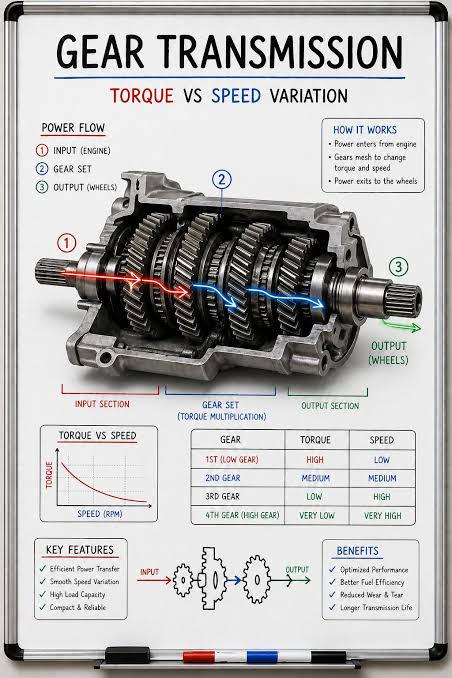
Each component plays a specific role in transferring motion and force throughout a machine. Depending on the application, a transmission system may increase or decrease rotational speed, change the direction of motion, or adjust the torque delivered to the driven equipment.
Choosing the right components requires more than simply matching dimensions. Engineers must also consider operating speed, torque requirements, load conditions, alignment, environmental factors, and the overall power demands of the application.
Understanding Torque in Power Transmission
Torque is the rotational force that causes an object to turn around an axis. In mechanical power transmission, torque determines how much twisting force a shaft, gear, or other rotating component can deliver.
Torque is commonly measured in newton-meters (Nm) in metric applications and pound-feet (lb-ft) in imperial applications.
For example, an electric motor driving a conveyor must produce enough torque to overcome friction, move the material being transported, and handle changes in load. If the motor or transmission components cannot provide sufficient torque, the system may struggle to start, slow down under load, or fail prematurely.
Why Torque Matters
Torque requirements vary depending on the equipment and the work being performed. A lightweight packaging machine may require relatively low torque, while a heavy-duty industrial mixer or lifting system may need substantially more.
Several factors influence torque requirements:
- Load weight: Heavier loads generally require greater torque to accelerate or move.
- Friction: Resistance within bearings, gears, and other moving parts increases the torque needed.
- Acceleration: Starting and stopping equipment can require additional torque beyond steady-state operating requirements.
- Operating conditions: Frequent starts, shock loads, and sudden changes in resistance can place additional stress on components.
Selecting gears, shafts, couplings, and other transmission components with appropriate torque ratings helps prevent excessive wear, deformation, and mechanical failure.
It is also important to distinguish between continuous torque and peak torque. A component may handle a high torque load briefly but be unsuitable for maintaining that load continuously.
Understanding Speed in Mechanical Systems
Speed describes how quickly a rotating component moves. In power transmission applications, rotational speed is typically measured in revolutions per minute (RPM).
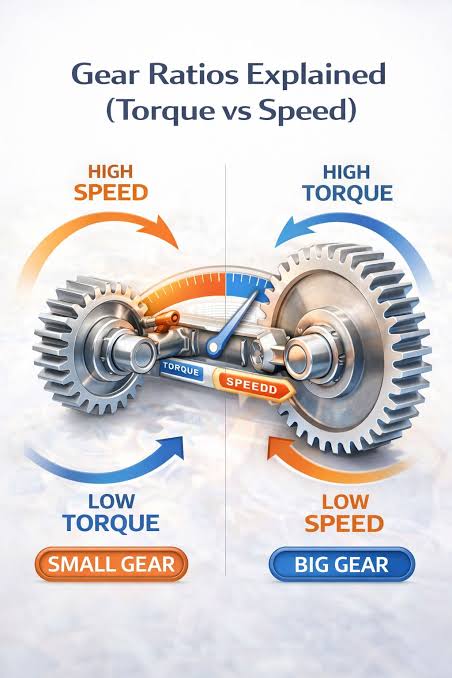
An electric motor may operate at a relatively high RPM, while the equipment it drives may require slower rotation and greater torque. Gearboxes and other transmission components help adjust speed to meet these requirements.
How Speed Ratios Work
A gear reduction system decreases output speed while increasing available output torque, subject to efficiency losses. Conversely, a speed-increasing system raises output speed while reducing available torque for a given input power.
For example, suppose a motor operates at 1,800 RPM and drives a gearbox with a 3:1 reduction ratio. The gearbox output speed would be approximately 600 RPM, assuming the stated ratio represents input speed divided by output speed.
This reduction may be useful when driving equipment that requires slower, controlled movement.
Speed selection affects several aspects of machine performance, including production rates, positioning accuracy, operating temperatures, vibration, and component life.
Running a component faster than its rated operating speed can cause overheating, increased vibration, lubrication problems, or premature failure. For this reason, operating speed limits should always be checked when selecting replacement parts.
Understanding Power and Its Role in Transmission
Power describes how quickly work is performed or energy is transferred. In a rotating mechanical system, power depends on both torque and rotational speed.
A machine producing high torque at a low speed may deliver the same power as another machine producing lower torque at a higher speed.
Power is commonly measured in watts (W), kilowatts (kW), or horsepower (HP).
For rotating systems, power in kilowatts can be calculated using the following formula:
Power (kW) = Torque (Nm) × Speed (RPM) ÷ 9,549
For example, a shaft delivering 50 Nm of torque at 1,500 RPM transmits approximately 7.85 kW of mechanical power.
This relationship is important when matching motors, gearboxes, and other transmission components. A system must provide sufficient power for the intended application while remaining within the operating limits of every component.
Power ratings alone do not tell the whole story. A component may be rated for a certain power level but still be unsuitable if the torque, speed, loading conditions, or operating environment exceed its specifications.
How Torque, Speed, and Power Work Together
Torque, speed, and power must be evaluated together when designing or maintaining a mechanical power transmission system.
Consider a machine that needs to move a heavy load at a controlled speed. The application may require high output torque and relatively low RPM. A gearbox with an appropriate reduction ratio can help deliver these characteristics.
Another application, such as a high-speed production machine, may require faster rotation and more precise motion. Its transmission components must support the required operating speed without sacrificing reliability.
In an ideal mechanical system, increasing torque through a reduction gearbox results in a corresponding decrease in rotational speed, with power remaining approximately constant. In real systems, some power is lost because of friction, heat, and other inefficiencies.
This is why the output power of a gearbox or transmission assembly is typically lower than its input power.
Understanding these relationships helps prevent common equipment problems, including undersized components, excessive motor loads, overheating, unnecessary energy consumption, and premature wear.
Choosing the Right Power Transmission Components
Selecting the right components starts with understanding the requirements of the entire machine rather than evaluating individual parts in isolation.
When sourcing mechanical power transmission components, consider the following factors:
1. Required torque and power. Determine the normal operating load, starting requirements, peak loads, and any anticipated overload conditions.
2. Input and output speed. Verify the motor's operating speed and the speed required by the driven equipment. Confirm that the selected components can safely accommodate these speeds.
3. Transmission ratio. Determine whether the application needs speed reduction, speed increase, or a particular relationship between input and output motion.
4. Component compatibility. Check shaft diameters, bore sizes, keyways, mounting dimensions, materials, and connection types. Proper compatibility helps ensure reliable assembly and operation.
5. Operating environment. Temperature, moisture, dust, chemicals, vibration, and other environmental conditions may affect material selection, lubrication, and component life.
6. Duty cycle and service life. Equipment that operates continuously or experiences frequent starts and stops may require different component specifications from machinery used intermittently.
7. Safety factors and manufacturer ratings. Follow manufacturer recommendations and applicable engineering standards. Account for service factors and dynamic loads where required, rather than selecting components based solely on average operating conditions.
Careful component selection can improve equipment reliability, simplify maintenance, and reduce the likelihood of unexpected downtime.
Common Mechanical Power Transmission Components
Several component types help control or transfer torque, speed, and power.
- Gears and gearboxes: Change rotational speed, transmit torque, and modify the relationship between input and output motion.
- Shafts: Transfer rotational power between machine components.
- Couplings: Connect rotating shafts and accommodate specified levels of misalignment or movement, depending on their design.
- Universal joints: Transfer rotary motion between shafts operating at an angle to one another.
- Belts and pulleys: Transfer motion between rotating shafts and provide speed ratios based on pulley diameters.
- Chains and sprockets: Transfer mechanical power in applications requiring positive engagement and reliable motion transfer.
- Bearings: Support rotating shafts and help reduce friction within a mechanical assembly.
Each component must be selected according to the specific operating conditions and requirements of the system.
How A2Z Metric Can Help
Finding the right mechanical power transmission components can be challenging, especially when an application requires specific metric or imperial dimensions, hard-to-find parts, or modifications to standard components.
A2Z Metric supplies metric and imperial power transmission and automation components, helping customers source parts for new equipment builds, maintenance projects, repairs, and original equipment manufacturer (OEM) requirements.
With more than 20 years of combined experience, A2Z Metric focuses on customer service, product value, and helping customers locate components that meet their application needs.
Even when a specific item is not listed in the online catalog, A2Z Metric may be able to help source the required component. Depending on availability and application requirements, this can include specialized gears, modified components, and other engineered parts.
When requesting assistance, provide as much information as possible, including the component type, dimensions, operating speed, torque requirements, power rating, material preferences, and any relevant drawings or part numbers.
This information helps narrow down suitable options and supports a more informed component selection process.
Conclusion
Torque, speed, and power are fundamental to understanding how mechanical power transmission systems operate. Torque determines rotational force, speed describes how quickly a component rotates, and power measures the rate at which energy is transferred.
Because these factors are interconnected, selecting components based on only one measurement can lead to performance issues, excessive wear, or equipment failure.
By evaluating operating requirements, transmission ratios, component compatibility, and environmental conditions, engineers and maintenance professionals can make better sourcing decisions and build more reliable mechanical systems.
Whether you are maintaining existing machinery, designing a new assembly, or searching for a hard-to-find replacement part, A2Z Metric can help you explore mechanical power transmission component options for your application.
Frequently Asked Questions (FAQs)
1. What is the difference between torque and power?
Torque is the twisting force that produces rotation, while power measures how quickly work is performed. In a rotating system, power depends on both torque and rotational speed.
2. How does speed affect torque?
In an ideal transmission system, reducing speed through a gearbox increases output torque for a given input power. Increasing speed generally reduces available torque. Actual results depend on transmission efficiency and operating conditions.
3. How do you calculate mechanical power?
For rotational systems, multiply torque in newton-meters by rotational speed in RPM and divide by 9,549 to calculate approximate power in kilowatts. Ensure the torque and speed values refer to the same shaft.
4. Why is gearbox efficiency important?
Gearboxes lose some energy through friction, heat, and other mechanical effects. Efficiency determines how much input power reaches the output shaft and can affect operating costs and thermal performance.
5. What happens if a component cannot handle the required torque?
An undersized component may experience excessive wear, deformation, overheating, or failure. It may also cause the machine to stall or operate unreliably. Always verify torque ratings and relevant service factors.
6. How do I choose the right gearbox for my application?
Consider input power, input and output speeds, required output torque, reduction ratio, duty cycle, mounting configuration, environmental conditions, and manufacturer recommendations. A qualified engineer or component supplier can help evaluate application-specific requirements.
7. What information should I provide when sourcing replacement components?
Provide the part number, component type, dimensions, shaft and bore measurements, operating speed, torque or power requirements, material requirements, and any drawings or photos available. Application details can help identify a suitable replacement.
8. Can A2Z Metric help source hard-to-find power transmission components?
Yes. A2Z Metric helps customers source metric and imperial power transmission and automation components, including parts that may not appear in the online catalog. Contact the team with your specifications to discuss available sourcing options.