Roller Chain Maintenance: How to Extend the Life of Your Drive System
Roller Chain Maintenance: How to Extend the Life of Your Drive System
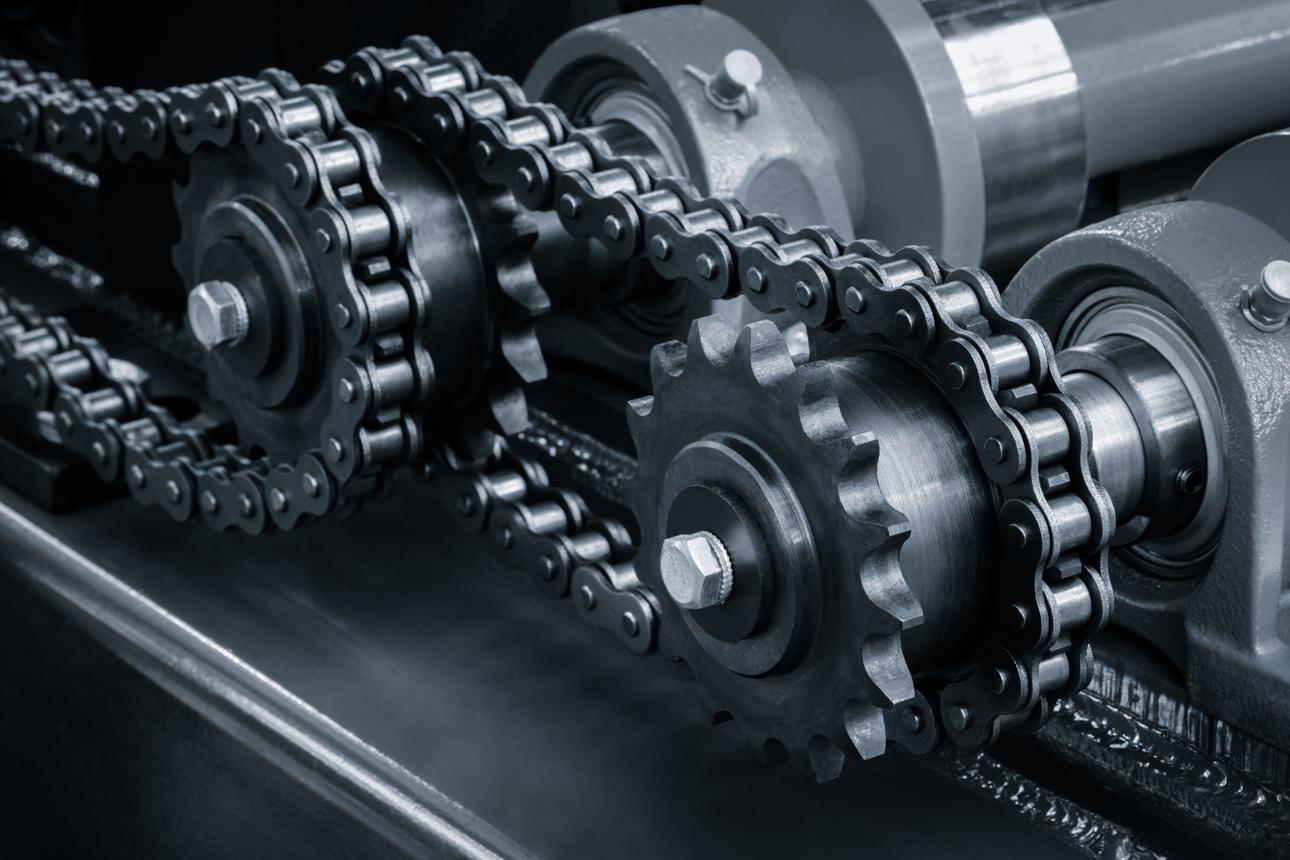
Roller chains are one of those components that can be easy to overlook—until something goes wrong.
They are used in conveyors, packaging equipment, material handling systems, manufacturing machinery, agricultural equipment, and countless other industrial applications. When properly selected and maintained, a roller chain can provide reliable power transmission for a long time. When maintenance is neglected, however, wear can quickly spread to sprockets, shafts, bearings, and other drive components.
The good news is that maintaining a roller chain doesn't have to be complicated. A regular inspection, proper lubrication, correct tension, and good alignment can go a long way toward extending the life of your entire drive system.
Why Roller Chain Maintenance Matters
A roller chain operates under continuous movement and load. As the chain travels around the sprockets, the pins, bushings, rollers, and plates experience friction and wear.
Over time, normal operation can cause the chain to elongate. Dirt, inadequate lubrication, excessive loads, poor alignment, and incorrect tension can speed up that process.
A worn chain doesn't just mean replacing the chain. It can also damage the sprockets. In some applications, continuing to operate with a severely worn chain can eventually result in chain failure, unexpected downtime, or damage to other components.
That's why preventive maintenance is usually much less expensive than waiting for a failure.
1. Keep the Roller Chain Properly Lubricated
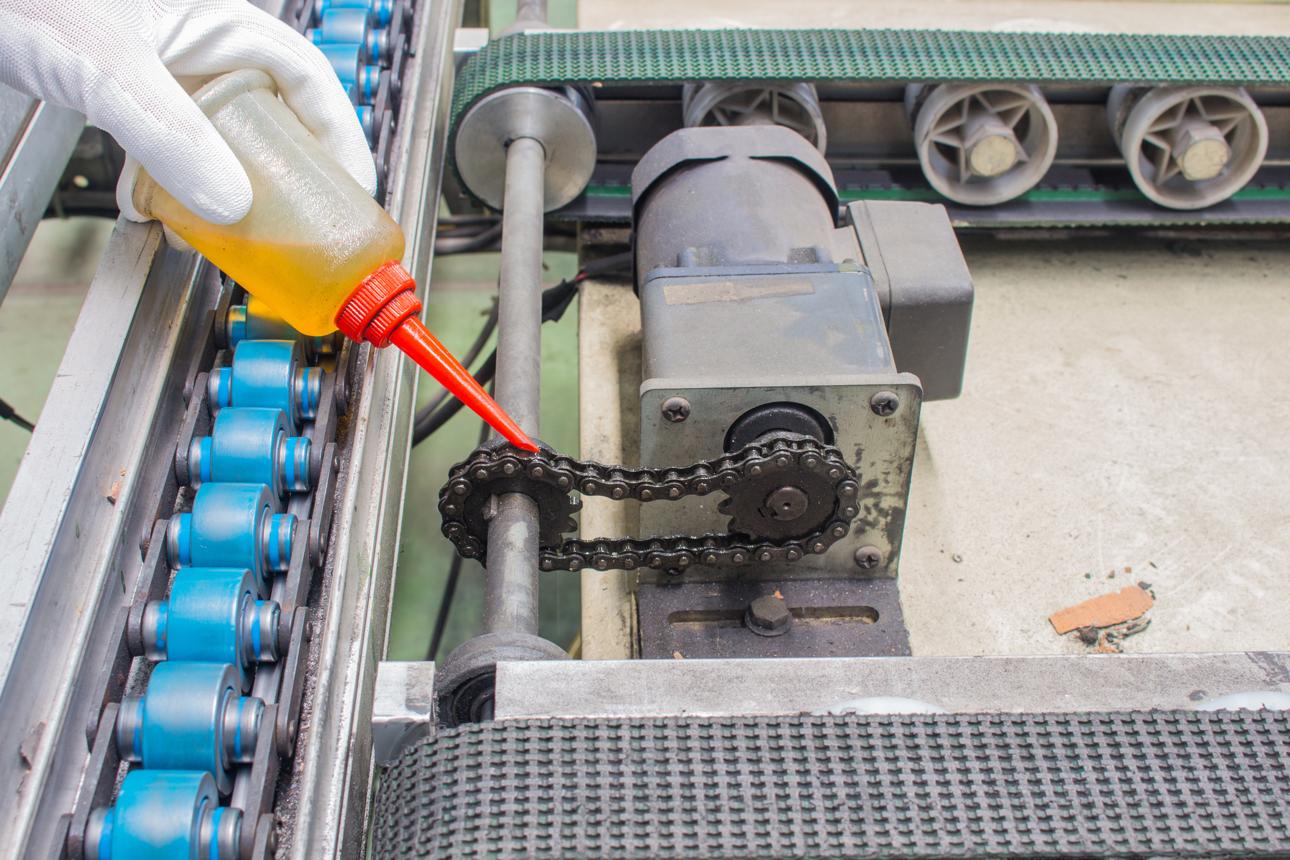
Lubrication is one of the most important parts of roller chain maintenance.
The lubricant needs to reach the areas where the chain's internal components move against one another. Simply coating the outside of the chain isn't necessarily enough.
Use the lubricant recommended for your specific chain and operating environment. Factors such as temperature, speed, load, moisture, dust, and chemical exposure can all affect lubricant selection.
A chain running in a dusty environment may also collect dirt when over-lubricated. The goal is not simply to use more lubricant—it is to use the right lubricant at the appropriate frequency.
2. Check Chain Tension
A roller chain that is too tight can place unnecessary loads on shafts, bearings, and sprockets. A chain that is too loose can create excessive movement, vibration, and the possibility of jumping the sprocket teeth.
The correct amount of slack depends on the particular drive and manufacturer's specifications, so there isn't one universal tension measurement that applies to every installation.
During an inspection, look for:
- Excessive chain sag
- Chain jumping or skipping
- Unusual vibration
- Uneven movement
- Tight or binding sections
- Excessive noise
If you're constantly adjusting the chain, don't assume tension is the only problem. Repeated tension issues can indicate worn sprockets, chain elongation, alignment problems, or another underlying issue.
3. Inspect the Sprockets
Replacing a chain without checking the sprockets can be a costly mistake.
As a roller chain wears, it can begin to wear the sprocket teeth as well. Look for teeth that are hooked, pointed, chipped, unevenly worn, or otherwise damaged.
A new chain running on severely worn sprockets may not perform as expected and can experience accelerated wear.
If both the chain and sprockets have significant wear, replacing them as a set is often the better approach.
4. Check Chain and Sprocket Alignment
Alignment is another important factor that can dramatically affect chain life.
The shafts should be properly positioned, and the sprockets should be aligned with one another. When sprockets aren't aligned correctly, the chain can experience uneven loading across its width.
Signs of an alignment problem may include:
- Wear concentrated on one side of the chain
- Uneven sprocket tooth wear
- Chain vibration
- Excessive noise
- Chain rubbing against surrounding components
- Premature chain failure
A straightedge or other appropriate alignment method can be used to check sprocket positioning. For larger or more complicated systems, follow the equipment manufacturer's alignment procedures.
5. Keep the Chain Clean
Dirt, metal particles, dust, and other contaminants can work their way into the moving parts of a roller chain.
This is particularly important in manufacturing environments where chains may be exposed to abrasive materials or debris.
Clean the chain using a method and cleaning product appropriate for the equipment and chain manufacturer's recommendations. Avoid damaging the chain or introducing contaminants during the cleaning process.
After cleaning, make sure the chain is properly lubricated before returning it to service.
6. Watch for Chain Elongation
One of the most common forms of roller chain wear is elongation.
Technically, the chain isn't simply stretching like a rubber band. Wear occurs between the chain's pins and bushings, increasing the effective pitch of the chain.
As this wear progresses, the chain may no longer properly engage the sprocket.
Rather than relying solely on appearance, chain elongation should be measured according to the chain manufacturer's recommended procedure and replacement limits.
If the chain has reached its allowable wear limit, replacement is generally the best option.
7. Listen to Your Drive System
Your equipment can often tell you when something isn't right.
Pay attention to changes in sound or operation. Grinding, rattling, clicking, squealing, or unusual vibration can all be reasons to investigate.
Also watch for changes in operating temperature or machine performance.
A chain that suddenly becomes noisy doesn't necessarily mean the chain itself is the problem. The cause could be a worn sprocket, misalignment, insufficient lubrication, excessive tension, a damaged bearing, or another component in the drive system.
That's why it's important to look at the entire drive—not just the chain.
8. Don't Ignore the Operating Environment
The environment surrounding the chain plays a major role in its service life.
For example, a chain operating in a clean, dry manufacturing environment may have very different maintenance requirements than one exposed to:
- Water or humidity
- High temperatures
- Abrasive dust
- Chemicals
- Food-processing environments
- Outdoor conditions
- Heavy shock loads
When selecting a replacement roller chain, make sure the chain is appropriate for the actual operating conditions—not just the dimensions of the chain being replaced.
9. Inspect the Entire Drive System
A roller chain doesn't operate by itself.
During maintenance, take the opportunity to inspect related components, including:
- Sprockets
- Shafts
- Bearings
- Chain guides
- Tensioners
- Fasteners
- Couplings
- Guards
- Mounting hardware
A problem with one component can create additional wear elsewhere.
For example, a loose sprocket can affect alignment, which can cause abnormal chain wear. Replacing the chain without correcting the loose sprocket may only solve the problem temporarily.
10. Know When It's Time to Replace the Chain
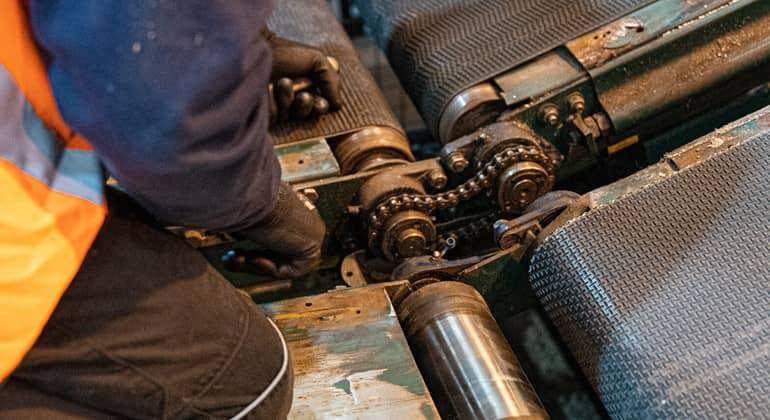
Maintenance can extend the life of a roller chain, but it can't make a worn chain new again.
Consider replacement when you find excessive elongation, damaged or cracked components, tight or seized links, significant corrosion, abnormal wear, or sprocket engagement problems.
It's also important to determine why the chain failed.
If a replacement chain wears out unusually quickly, simply installing another chain may not solve the problem. The underlying cause could be incorrect lubrication, excessive loading, poor alignment, incorrect tension, contamination, or an improperly selected chain.
Roller Chain Maintenance Checklist
For an easy preventive maintenance routine, check:
☐ Chain lubrication
☐ Chain tension and slack
☐ Chain elongation/wear
☐ Sprocket tooth condition
☐ Sprocket alignment
☐ Chain cleanliness
☐ Unusual noise or vibration
☐ Loose fasteners or mounting hardware
☐ Bearings and shafts
☐ Guards and safety equipment
Always follow your equipment manufacturer's maintenance requirements and proper lockout/tagout procedures before working on powered machinery.
How A2Z Metric Can Help You Source Roller Chain
Finding the correct replacement roller chain isn't always as simple as measuring the chain and ordering the first matching part.
You may need to determine the chain series, pitch, roller diameter, inner width, material, attachment requirements, length, operating environment, and compatibility with the existing sprockets.
A2Z Metric can help you source the roller chain and related power transmission components you need for your application.
Whether you're replacing a worn chain during routine maintenance or trying to find a difficult-to-source component for an equipment breakdown, A2Z Metric can help identify potential solutions based on your requirements.
We work with both metric and imperial components and can help source products beyond the items commonly listed in our online catalog.
If you're not sure exactly what roller chain you need, providing information such as the existing chain dimensions, equipment application, sprocket information, photos, or manufacturer information can help with the sourcing process.
Can't find the roller chain or component you need? Contact A2Z Metric to discuss your application and sourcing requirements.
Frequently Asked Questions About Roller Chain Maintenance
How often should roller chain be lubricated?
There isn't one universal lubrication interval. The appropriate frequency depends on chain speed, load, operating temperature, environment, and the manufacturer's recommendations. Chains operating under severe conditions may require more frequent attention.
What causes roller chain to wear quickly?
Common causes include inadequate lubrication, contamination, excessive loads, incorrect tension, sprocket misalignment, worn sprockets, and selecting a chain that isn't appropriate for the application.
Should I replace the sprockets when I replace the chain?
If the sprockets are significantly worn or damaged, replacing them with the chain is generally recommended. Installing a new chain on severely worn sprockets can lead to accelerated chain wear.
How do I know if my roller chain is worn?
Look for excessive elongation, unusual noise, tight links, corrosion, vibration, uneven wear, or poor engagement with the sprockets. Measuring chain elongation according to the manufacturer's guidelines provides a more reliable assessment than appearance alone.
Can A2Z Metric help me find a replacement roller chain?
Yes. A2Z Metric can help source roller chain and other power transmission components in both metric and imperial configurations. If you're having trouble identifying a replacement, provide the available dimensions, application information, photos, or part numbers, and A2Z Metric can help with the sourcing process.
Final Thoughts
Roller chain maintenance is relatively simple, but consistency matters.
Keeping the chain lubricated, maintaining the correct tension, checking alignment, inspecting sprockets, removing contaminants, and watching for early signs of wear can help prevent unnecessary downtime and extend the life of your drive system.
And when the time comes to replace a chain, don't automatically assume you need the exact same part just because it was previously installed. It's worth confirming that the replacement chain is appropriate for the load, speed, environment, and equipment.
When you need help sourcing roller chain or other industrial power transmission components, A2Z Metric is here to help you find the right solution for your application.