Shaft Collars, Retaining Rings, and Locking Devices: How to Keep Components in Position
Shaft Collars, Retaining Rings, and Locking Devices: How to Keep Components in Position
In mechanical systems, keeping components securely in the correct position is just as important as choosing the right bearing, gear, shaft, or coupling. Even small amounts of unwanted axial movement can lead to misalignment, excessive wear, vibration, and equipment failure.
That is where shaft collars, retaining rings, and other locking devices come into play.
These components are designed to help control the position of parts on a shaft, prevent movement, and maintain proper alignment during machine operation. While they may be small compared with other machine components, they can play a critical role in the reliability and performance of an assembly.
Understanding the differences between these devices can help engineers, maintenance teams, and machine builders select the right solution for their application.
What Is a Shaft Collar?
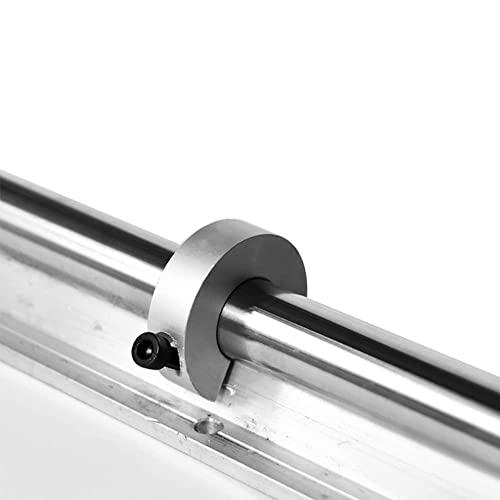
A shaft collar is a mechanical component that fits around a shaft and is used to locate, position, or limit the movement of other components.
Shaft collars are commonly used in applications involving bearings, sprockets, pulleys, gears, linear components, and other rotating or moving parts.
Depending on the application, a shaft collar may be used to:
- Prevent axial movement along a shaft
- Establish a fixed position for a component
- Act as a mechanical stop
- Maintain spacing between components
- Help position bearings or other machine elements
- Provide a mounting point for sensors or other components
Shaft collars are generally available in different materials, sizes, and configurations. Common designs include set-screw shaft collars and clamping shaft collars.
Set-screw collars secure themselves to the shaft using a screw that presses against the shaft surface. Clamping collars use clamping force around the shaft and can provide secure positioning without relying on a single point of contact.
The best choice depends on the shaft material, load, precision requirements, installation method, and operating environment.
What Are Retaining Rings?
Retaining rings, sometimes called snap rings or circlips, are designed to fit into a groove on a shaft or inside a bore to retain a component in position.
Unlike a traditional shaft collar, a retaining ring does not normally clamp around the shaft. Instead, the ring engages with a specifically machined groove.
Retaining rings are often used to retain:
- Bearings
- Gears
- Bushings
- Washers
- Pulleys
- Shafts
- Other rotating or stationary components
There are several styles of retaining rings, including external retaining rings for shafts and internal retaining rings for bores.
Because retaining rings are installed into grooves, proper groove dimensions are critical. The ring, shaft or bore, and groove must be compatible to provide the required retention force.
For applications where space is limited, retaining rings can be an efficient alternative to larger mechanical retention systems.
Shaft Collars vs. Retaining Rings
Although both components can prevent unwanted movement, they work differently.
A shaft collar is generally positioned around the shaft and secured using a clamping mechanism or set screw. A retaining ring relies on a machined groove and the ring's ability to resist axial movement.
Shaft collars may be preferred when:
- The shaft does not have a retaining groove
- Adjustability is important
- Components need to be repositioned
- A physical stop is needed
- The assembly requires easy installation or removal
Retaining rings may be preferred when:
- The shaft or bore can be machined with a groove
- Space is limited
- A compact retention solution is needed
- The design calls for a permanent or semi-permanent retaining feature
- High-speed rotating equipment requires a properly engineered retention method
The correct choice should always be based on the complete mechanical design rather than simply selecting the smallest or least expensive option.
Other Types of Locking Devices
Shaft collars and retaining rings are only two examples of components used to control movement. Depending on the application, engineers may use several other types of mechanical locking and positioning devices.
Set Screws
Set screws can secure components directly to a shaft or prevent rotation between components. They are commonly used with shaft collars, hubs, pulleys, and other machine elements.
Locknuts
Locknuts can help secure bearings, hubs, and other components to a shaft. Different locknut designs are available for different mechanical applications.
Washers and Spacers
Washers and spacers can help control component position and distribute loads. In many assemblies, they work alongside other locking components to establish the correct spacing.
Taper-Lock and Clamping Components
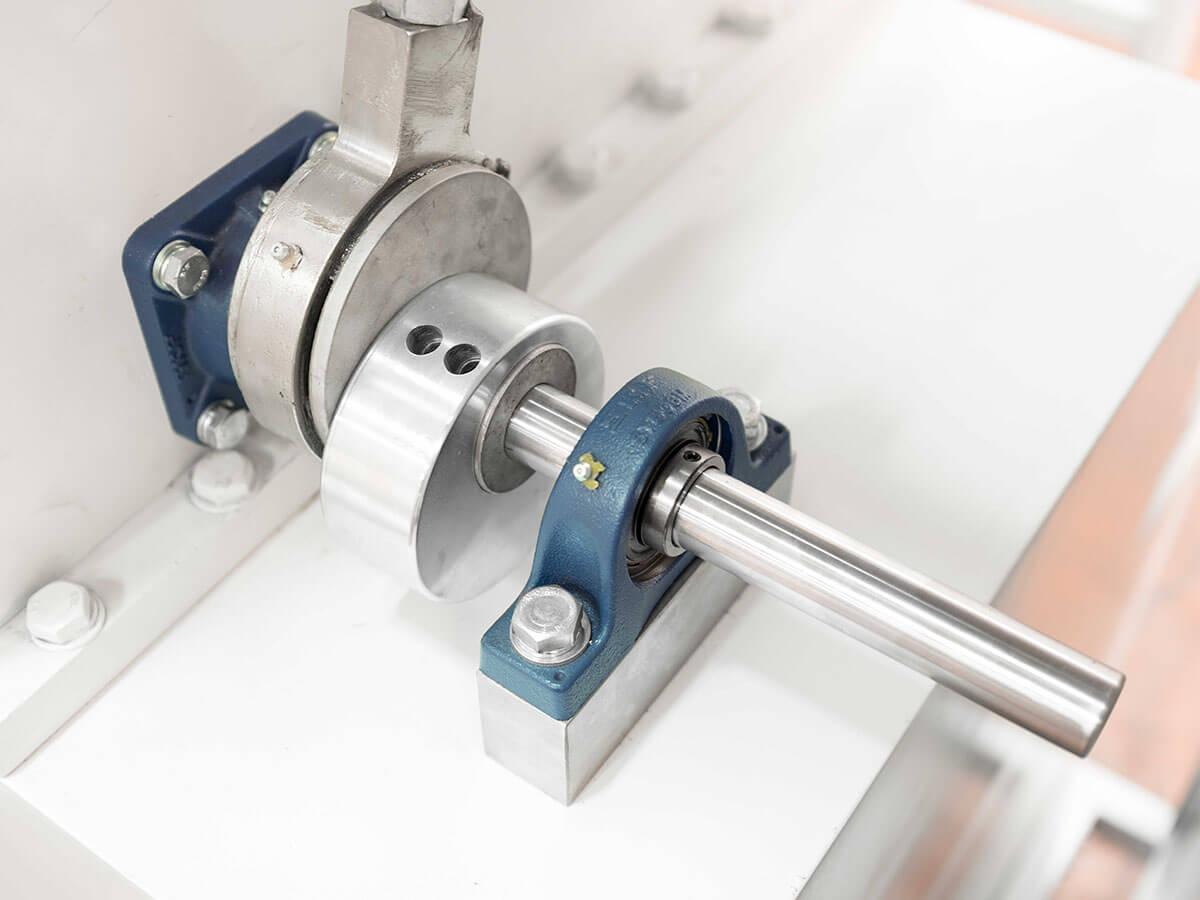
Clamping systems can secure hubs, pulleys, sprockets, and other components to shafts while providing a strong connection without relying solely on a set screw.
Snap Rings
Snap rings are a common form of retaining ring used in many mechanical assemblies. They can provide an economical and compact method of retaining components.
Why Proper Component Positioning Matters
A component that moves when it should remain stationary can create problems throughout an entire machine.
For example, excessive axial movement of a bearing can affect alignment. A gear that shifts along a shaft can alter its engagement with another gear. A pulley that moves out of position can create belt alignment problems.
Over time, these issues can contribute to:
- Premature bearing failure
- Excessive vibration
- Shaft and component wear
- Gear or belt misalignment
- Increased noise
- Reduced machine efficiency
- Unexpected downtime
- Damage to surrounding components
Properly selected locking and positioning components help prevent these issues by maintaining the intended relationship between machine elements.
How to Choose the Right Locking Device
When selecting a shaft collar, retaining ring, or other locking component, consider more than just the shaft diameter.
1. Shaft or Bore Size
The component must match the dimensions of the shaft, bore, or retaining groove. Even a small dimensional mismatch can affect performance.
2. Axial Load
Determine how much force the locking device needs to withstand. A component designed for light-duty positioning may not be appropriate for heavy axial loads.
3. Rotational Speed
High-speed applications may require components specifically designed for rotational service. Balance, secure attachment, and proper installation become increasingly important as speed increases.
4. Material
Steel, stainless steel, aluminum, and other materials may be appropriate depending on the environment and application.
For corrosive environments, stainless steel or other corrosion-resistant materials may be necessary.
5. Installation and Maintenance
Consider whether the component needs to be frequently adjusted or removed. A shaft collar may be more convenient for an application requiring repeated repositioning, while a retaining ring may be ideal for a compact assembly designed for longer-term installation.
6. Operating Environment
Temperature, moisture, chemicals, contamination, and other environmental factors can influence material and component selection.
Common Mistakes to Avoid
One of the most common mistakes is selecting a component based only on its nominal size.
A shaft collar may fit the shaft diameter but still be inappropriate for the required load. Similarly, a retaining ring may fit a groove but not have sufficient capacity for the application.
Other common mistakes include:
- Using the wrong groove dimensions
- Choosing an inadequate material
- Ignoring operating speed
- Failing to account for axial loads
- Improper installation
- Using a component outside its intended application
- Replacing a specialized component with an incorrect substitute
When the application is critical, checking the manufacturer's specifications and dimensional requirements is essential.
How A2Z Metric Can Help Source Shaft Collars, Retaining Rings, and Locking Devices
Finding the exact mechanical component you need isn't always as simple as searching by size.
At A2Z Metric, we help customers source metric and imperial power transmission and automation components, including hard-to-find machine components and engineered products.
Our catalog includes many commonly requested products, but not everything we can source is necessarily listed online. If you need a specific shaft collar, retaining ring, locking device, or related machine component, our team can help identify potential sourcing options based on your application and requirements.
This can be especially helpful when you are:
- Replacing an obsolete component
- Working from an existing part number
- Matching an existing shaft or bore
- Building new machinery
- Repairing equipment
- Sourcing metric components
- Looking for a difficult-to-find replacement
If you know the dimensions, part number, manufacturer, material, or application requirements, providing that information can help narrow down the right component.
Can't find the component you need? Contact A2Z Metric to discuss your application and sourcing requirements.
Frequently Asked Questions
What is the purpose of a shaft collar?
A shaft collar is used to position or limit the movement of components on a shaft. It can serve as a mechanical stop, spacer, or positioning device.
What is the difference between a shaft collar and a retaining ring?
A shaft collar typically clamps or screws onto a shaft, while a retaining ring is installed into a groove machined into a shaft or bore.
Are shaft collars available in metric sizes?
Yes. Metric shaft collars are commonly available in a variety of shaft diameters and materials. A2Z Metric can also help source metric components for specific applications.
What are retaining rings used for?
Retaining rings are used to hold components such as bearings, gears, bushings, and other machine elements in place. They are installed into grooves designed specifically for the retaining ring.
Can a shaft collar replace a retaining ring?
In some applications, a shaft collar may provide an alternative method of positioning a component. However, the two are not universally interchangeable. Load requirements, available space, shaft design, and installation requirements should all be evaluated.
What information should I provide when sourcing a replacement?
Useful information includes shaft diameter, bore size, overall dimensions, material, load requirements, operating speed, manufacturer, part number, and photos of the existing component.
Final Thoughts
Shaft collars, retaining rings, and locking devices may be small components, but they serve an important purpose in keeping mechanical assemblies properly positioned.
Choosing the right retention method can help reduce unwanted movement, maintain alignment, minimize wear, and improve overall equipment reliability.
Whether you're designing a new machine, maintaining existing equipment, or trying to replace a hard-to-find component, selecting the correct part requires attention to dimensions, materials, loads, speed, and operating conditions.
A2Z Metric can help you source the metric and imperial components you need for your next build, repair, or replacement project.